Homemade Pappardelle Pasta Recipe: A Beginner's Guide
There's something uniquely satisfying about creating food from scratch, and making your own pasta is no exception. While dried pasta certainly has its place, the experience of fresh, homemade pasta is unparalleled. Among the vast array of pasta shapes, pappardelle stands out with its broad, flat ribbons, perfect for clinging to rich, hearty sauces. If you've ever felt intimidated by the idea of making pasta at home, fear not! This comprehensive pappardelle pasta recipe is designed to guide beginners through every step, transforming simple ingredients into a culinary masterpiece. Get ready to embark on a delicious journey that will elevate your pasta nights forever.Why Make Homemade Pappardelle? The Magic of Fresh Pasta
Opting for homemade pappardelle isn't just about saving a few dollars; it's about an entirely different sensory experience. Fresh pasta boasts a delicate, tender texture that simply cannot be replicated by its dried counterparts. It cooks faster, absorbs sauces more effectively, and has a nuanced flavor that speaks volumes of its handcrafted origins. Imagine the aroma filling your kitchen as you knead the dough, the meditative rhythm of rolling it out, and the sheer joy of tasting your creation. Pappardelle, hailing from Tuscany, literally means "to gobble up" or "to gulp down" in Italian, a testament to its hearty and satisfying nature. Its wide surface area makes it an ideal canvas for robust ragùs, slow-cooked meats, and creamy mushroom sauces. Understanding its rich background only adds to the appreciation of this wonderful pasta shape. If you're curious to delve deeper into the origins and allure of this particular pasta, explore Why Pappardelle? Uncover This Hearty Italian Pasta Recipe for more fascinating insights. Making your own pappardelle is not just cooking; it's an act of culinary love, connecting you to generations of Italian tradition.Essential Ingredients and Tools for Your Pappardelle Pasta Recipe
Before you roll up your sleeves and dive into making your pappardelle pasta recipe, let's gather everything you'll need. The beauty of fresh pasta lies in its simplicity – just a few basic ingredients and some common kitchen tools are all it takes.Ingredients:
- All-Purpose Flour or "00" Flour: While "00" flour (a finely milled Italian flour) is often considered ideal for pasta due to its low protein content and fine texture, good quality all-purpose flour works wonderfully too, especially for beginners. For this recipe, we'll use 2 cups (approximately 240-250g).
- Large Eggs: 2 large eggs are typically sufficient for this amount of flour. The eggs provide moisture, richness, and help bind the dough, giving it its characteristic yellow hue and tender chew.
- Pinch of Salt: A small pinch (about 1/2 teaspoon) enhances the flavor of the pasta itself.
- Optional: A tablespoon of olive oil or a splash of water if your dough feels too dry.
- Semolina Flour (for dusting): This coarse flour is essential for preventing your cut pasta from sticking together.
Tools:
- Large Work Surface: A clean, spacious countertop or a large wooden board is ideal for kneading.
- Fork: For whisking the eggs.
- Bench Scraper: Invaluable for scraping up dough bits, cleaning your work surface, and helping with kneading.
- Rolling Pin OR Pasta Machine:
- Rolling Pin: A sturdy, heavy rolling pin will require some elbow grease but is perfectly capable of achieving thin pasta sheets.
- Pasta Machine: A manual hand-cranked or electric pasta machine makes rolling incredibly easy and ensures uniform thickness. This is highly recommended for beginners.
- Sharp Knife or Fluted Pasta Cutter: For cutting your pappardelle ribbons. A ruler can be handy for consistent width.
- Plastic Wrap: For resting the dough.
- Baking Sheets and Clean Kitchen Towels: For drying the pasta before cooking or storing.
Step-by-Step Guide to Your Perfect Pappardelle Pasta Recipe
Now for the fun part! Follow these steps closely for a truly rewarding homemade pappardelle pasta recipe experience.Making the Dough:
- Mound the Flour: On your clean work surface, pour the flour into a mound. Create a well in the center, like a volcano crater.
- Add Eggs and Salt: Crack the eggs into the well and add the pinch of salt.
- Whisk and Incorporate: Using a fork, gently whisk the eggs in the well, slowly drawing in small amounts of flour from the inner walls of the well. Continue until the eggs are mostly incorporated and the mixture forms a shaggy, thick paste.
- Knead the Dough: Use your bench scraper to bring the remaining flour into the shaggy mixture. Now, it’s time to knead! Using the heel of your hand, push the dough away from you, fold it back over, and rotate. Repeat this motion for 10-15 minutes. The dough will start rough and sticky, but as you knead, it will become smooth, elastic, and less sticky. It should feel firm but pliable, like an earlobe. If it's too dry, add a tiny bit of water (1/2 tsp at a time). If it's too wet, add a little flour.
- Rest the Dough: Form the dough into a ball, wrap it tightly in plastic wrap, and let it rest at room temperature for at least 30 minutes (or up to 2 hours). This step is crucial! Resting allows the gluten to relax, making the dough much easier to roll out thinly without tearing.
Rolling the Dough:
Working with a pasta machine is recommended for beginners, but a rolling pin works too!
- Divide the Dough: Unwrap the rested dough and cut it into 2-4 pieces. Keep the pieces you're not working with covered with plastic wrap to prevent them from drying out.
- Flatten and Flour: Take one piece of dough and flatten it slightly with your hands or a rolling pin into a rough rectangle. Dust lightly with semolina flour.
- Using a Pasta Machine:
- Set your machine to the widest setting (usually '1'). Pass the dough through.
- Fold the dough in half or thirds, dust lightly with semolina, and pass it through the widest setting again. Repeat this 2-3 times until you have a smooth, even rectangle. This is called "laminating" the dough and strengthens the gluten structure.
- Gradually decrease the setting, passing the dough through each setting once or twice, until you reach your desired thickness. For pappardelle, aim for a setting around '6' or '7' on most machines – it should be thin enough to just about see your hand through it, but not so thin it tears easily.
- Using a Rolling Pin:
- Lightly flour your work surface and the rolling pin.
- Roll the dough from the center outwards, rotating it frequently and flipping it over to ensure even thickness.
- Keep rolling until the dough is about 1-2mm thick. This requires patience and consistent pressure.
Cutting the Pappardelle:
- Prepare for Cutting: Lay your thinly rolled pasta sheet flat on a lightly floured (with semolina) surface. If your sheet is very long, you might want to cut it in half for easier handling.
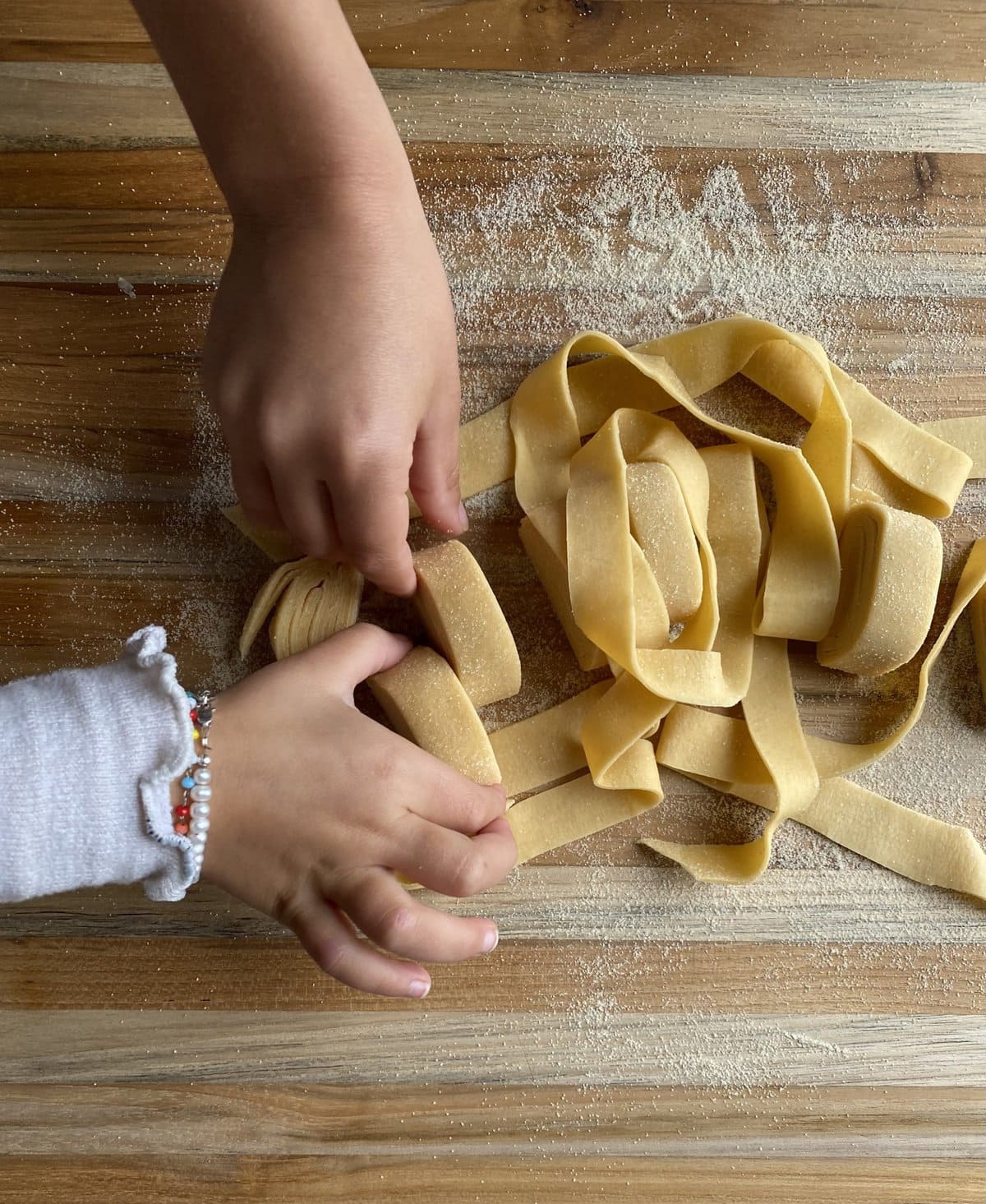
- Fold (Optional, but recommended): Lightly dust the entire sheet with semolina flour. Starting from one short end, loosely fold the sheet over itself, accordion-style, into a strip about 3-4 inches wide. Do not press down hard.
- Cut the Ribbons: Using a sharp knife or fluted pasta cutter, cut the folded dough into strips about 1 inch (2.5 cm) wide.
- Unfold and Dust: Gently unfold the cut pappardelle ribbons and toss them lightly with additional semolina flour to prevent sticking. You can leave them in loose nests on a semolina-dusted baking sheet or hang them on a pasta drying rack.
Cooking Your Fresh Pappardelle:
- Boil Water: Bring a large pot of generously salted water to a rolling boil. Fresh pasta needs more salt in the water than dried, as it cooks so quickly.
- Add Pasta: Gently add the fresh pappardelle to the boiling water. Do not overcrowd the pot; cook in batches if necessary.
- Cook Quickly: Fresh pappardelle cooks very fast! It typically takes only 2-4 minutes, depending on its thickness. It will float to the surface when done. Taste a piece to ensure it's al dente – tender with a slight bite.
- Drain and Serve: Use tongs to transfer the pasta directly into your prepared sauce. Toss gently to coat. Reserve a little pasta water before draining, as it can be used to loosen the sauce if needed.
Once you've mastered this pappardelle pasta recipe, you'll want to pair your beautiful creations with the perfect accompaniment. Discover the ideal pairings by reading Best Sauces for Pappardelle: Enhance Your Pasta Recipe.
Tips for Success and Common Pitfalls to Avoid
- Humidity Matters: The exact amount of flour or water needed can vary slightly depending on the humidity in your kitchen. Trust the feel of the dough – it should be firm, smooth, and elastic, not sticky or crumbly.
- Don't Over-Flour: Too much flour during kneading or rolling will result in tough, dry pasta. Use just enough to prevent sticking. Semolina flour is your friend for dusting, as it absorbs less moisture than all-purpose.
- Knead and Rest Properly: These two steps are non-negotiable. Proper kneading develops the gluten, and resting allows it to relax, making for tender, easy-to-roll pasta.
- Work in Batches: If you're making a large quantity, keep portions of dough covered while you work with others. Also, ensure your rolled sheets and cut pasta don't sit exposed for too long, as they will dry out.
- Dust Generously (After Cutting): Once cut, toss your pappardelle liberally with semolina flour to prevent the strands from clumping together. This is especially important if you're not cooking it immediately.
- Storage: Fresh pasta can be cooked immediately. For later use, you can dry it on a rack for a few hours until brittle and store in an airtight container for a few days, or freeze it for up to a month. For freezing, make sure the nests are well-dusted and flash freeze them on a baking sheet before transferring to a freezer bag.
